


The Latest News from PA Chapter of APA…
When a Region Commits to Safety
 July 1 from 12:00 pm – 1:00 pm
In just 12 months, planners and other professionals in the hazard mitigation, disaster recovery, and resilience field have seen an exponential shift in priorities, operations, and more. However, planners still have a role in leading hyperlocal, community-oriented approaches and helping communities assess risk, build buy-in, and make risk reduction more actionable and resilient. The trends are trending – but how did we get here? This webinar will explore ten past, present, and future trends that have shaped how we as planners fit in the emergency management and disaster space, along with practical tips on how to incorporate current trends and classic planning skills into your practice.
Deadline to register is June 30.
APA PA Annual Conference
- Save the Date for the APA PA Chapter Annual Conference: Forging the Next 250 Through Preservation, Innovation, and Collaboration, which will take place from October 18 -20, 2026 at the Wind Creek Bethlehem.
- Sponsors, Exhibitors & Advertisers: Secure your support for the Annual Conference. The conference presents an exceptional opportunity for organizations like yours to showcase your expertise and capabilities to planning professionals and policymakers from across the Commonwealth. For more information.
National Planning Conference Recap
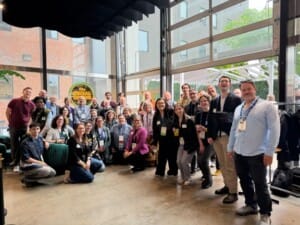 The APA-PA Chapter hosted a meet & greet for Pennsylvania planners attending the National Planning Conference in Detroit. The event was held on Monday, April 27, 2026 from 5:00 PM – 6:00 PM at Social Brews. Approximately 40 planners attended for mixing and mingling. They enjoyed light bites sponsored by McCormick Taylor. Thanks to everyone who came out to connect, reconnect, and build new relationships!
Introducing our Officers: Laura Ludwig, Secretary
 Laura Ludwig, AICP, is a Project Manager and the Planning Group Manager at Herbert, Rowland & Grubic, Inc. (HRG), where she works on everything from comprehensive plans and downtown revitalization strategies to active transportation plans and zoning and subdivision and land development ordinance rewrites. With more than 21 years of experience, Laura’s planning career has taken her through the nonprofit, public, and private sectors. She holds both her undergraduate degree (2003) and Master of Public Administration in Urban and Regional Affairs (2005) from the University of Pittsburgh. HAIL TO PITT!
Outside of work, Laura is a busy mom to Alexandra (15) and Evan (12), who keep the family on the road for soccer, baseball, basketball, and softball games and tournaments from Indiana to South Carolina. She, her husband Mike, and their dog Luna (2) make the most of the trip—even if Laura can’t resist stopping to photograph great public spaces, bike lanes, streetscapes, neat historic buildings, and parks along the way (and annoying her family while doing this!).
Statewide Active Transportation Summit
Thursday, June 4, 2026
8:30am to 4:30pm (with optional events before and after)
212 Locust Street, Harrisburg
Working on improving walking, biking, and accessibility in your community now? Thinking about doing so in the future? You should plan to attend the 2026 Statewide Active Transportation Summit to meet people doing this work in various parts of PA, see examples of work underway, and discover key elements to help you bring active transportation improvements home for your area.
There is a full rundown, including registration links, draft schedule, and room block info (only good through May 12!) on the PDC website here: Statewide Active Transportation Summit – The Pennsylvania Downtown Center
The event proper is taking place on Thursday, June 4, with some optional activities the evening prior, including tours and a reception at Millworks with the new Coalition for Active Mobility in Pennsylvania, which will also be featured in a plenary panel discussion on the 4th.
The event is open to all who live and/or work in PA. That said, people who are in DEP Environmental Justice areas (defined for this purpose as having a PennEnviroScreen score above 60%) or DOH SPAN and Diabetes priority counties are even eligible to apply for travel cost scholarships. Those counties are Berks, Clearfield, Erie, Fayette, Forest, Greene, Lackawanna, Lawrence, Lebanon, Lehigh, Luzerne, Lycoming, Mercer, Northumberland, and Philadelphia.
Opportunities for Giving
Each year the Chapter offers a scholarship to support individuals seeking funds for academic degree programs, internships, and professional development activities. If anyone would like to contribute to the Chapters Scholarship fund donations can be made online. We accept all major credit cards, and you can also send a check. Please make your check payable to “PA Chapter of APA Scholarship Fund” and mail it to P.O. Box 4680, Harrisburg, PA 17111.
Communication and Membership Committee
We are looking for volunteers to contribute articles for our monthly E-News. If you are interested or would like more information, please contact us.
APA PA Board Appoints Will Hunt to Pennsylvania State Geospatial Coordinating Board
 The APA-PA Board recently appointed Will Hunt, the Director of County Planning, Community development and GIS at Potter County, to the Pennsylvania State Geospatial Coordinating Board, which was established to provide advice and recommendations to the Governor and the citizens of Pennsylvania on geospatial issues. It also provides uniform data standards, coordination, and efficiency in geospatial policy and technology issues among Federal, State, and local government agencies; academic institutions; and the private sector.” Learn more: State Geospatial Coordinating Board | Office of Administration | Commonwealth of Pennsylvania
Designing Cities that Support Mothers
By Betsy Logan, AICP
Mother’s Day, it is an ideal moment to reflect on how urban design can better support mothers and caregivers who navigate cities every day.
Urban environments have long been shaped around traditional gender roles, typically by men – for men. However, women and gender-diverse people navigate cities differently. Recognizing these disparities helps planners create environments that work for mothers year-round.
Mothers, and women in general, perform more unpaid care work including school drop-offs, errands, and medical appointments, while also relying heavily on public transit. A single commute may involve multiple stops, making car-centric systems inefficient for daily life.
Public spaces show similar gaps. Playgrounds cater to children but can overlook the comfort and safety of the adults supervising them. Safety in general for women is also an issue in public spaces with 77% of women in the US report experiencing some form of street harassment.
Designing cities with mothers in mind includes elements such as adequate lighting, clear sightlines, active ground floors, safe and accessible transit stops, diverse seating, and equitable restroom access.
As we celebrate Mother’s Day, the most important step is ensuring mothers, women, and gender-diverse individuals have a seat at the table. Engagement must consider childcare needs, work schedules, and transportation barriers to ensure all voices have the opportunity to shape their environment.