Posted on September 29, 2021
Meet Rebecca Wetzler, AICP, Chair of Healthy Communities in Pennsylvania Task Force
Healthy CommunitiesMeet Rebecca Wetzler, AICP, Chair of Healthy Communities in Pennsylvania Task Force
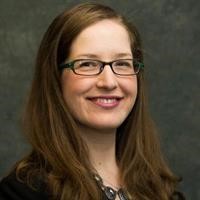
We had an opportunity to catch up with Rebecca Wetzler, the new chair of our Healthy Communities in Pennsylvania Task Force, to learn more about her background and interests, as well as her views on the critical intersection of health and planning.
What is your current job title/responsibilities?
My job title is Planning Manager at Michael Baker International. I lead hazard mitigation plan updates across PA and act as a technical advisor to FEMA Region 3 on a Community Engagement and Risk Communications contract.
Previous positions you would like highlighted?
My career path has been a bit circuitous, though all connected to an interest in the overlap of health and planning, starting as a science teacher, then emergency manager, transportation safety and security specialist to now.
How have you engaged with Healthy Communities in Pennsylvania Task Force?
I started as a member and was fascinated by the discussion, learning so much on each call. Justin Dula (past Chair, current Advisor) engaged so many different folks from different sectors. I started taking notes to remember everything and then sending them to Justin in a pseudo-officer role. This new role as Chair is an honor, and I’m working on our strategic plan now for 2022.
Educational background/volunteer positions you would like to share
I have a Masters in City Planning, Masters in Education, and Bachelors in Psychology. One of my favorite volunteer roles was with the Museum of Science in Boston, learning about and co-presenting various live animals- from a 16 foot amelinistic Burmese python (took five of us to lift!) to a very sweet porcupine named Harriet.
How does planning intersect with healthy communities?
How does it not? We seem to be frequently siloed- planners OR healthcare practitioners – but there are SO many connections. How often are doctors consulted on final comprehensive plans or zoning and land use regulatory updates? Are planners invited to any medical summits for emerging trends and challenges in healthcare? In my mind, the role of the planner is to support a person through access- to parks, to a job, to food, etc. The role of the doctor is to make sure the person can access those things physically- through health monitoring, surgeries, etc.
We talked in the Task Force recently about some of the PA stats- we’re the most floodprone state in the country, and, because of the age of many of our communities- built along rivers for trade – there are a lot of homes and businesses that get flooded. Community evacuation shelters often serve high calorie, high salt shelf stable foods- not great for the 50% of Americans with hypertension. Disasters are individual and while flooding is common, so are house fires, nearby gas leaks, and all sorts of other challenges. Long term, many of these displaced folks endure a huge emotional trauma as their homes are damaged, finances put in jeopardy, and health threatened by limited access to water, food, family and friend connections, etc. All the disruptions- including to their sleep- may skew the efficacy of whatever meds they’re on. And so much of this spiral could be avoided. What if the community invested more in parks and sidewalks to encourage physical activity while increasing pervious surface? This reduces the risk to the individual AND to the home. What if there were regular programs in the parks to build community connections so folks weren’t alone in a disaster? These programs exist, but they’re so often executed independently.
Healthy communities start at the individual level and thinking about all the stress factors on an individual. One of our members, Michelle Schasberger, works closely with YMCAs, thinking about how to provide daycare facilities near the rapidly growing Amazon warehouses. As a mom- I can tell you that daycare is a critical part to my success as an employee and mental health overall.
What is a project you are particularly proud of?
I co-developed a series of substantial damage materials and training presentations with FEMA and they seem to be useful. The FEMA folks won a national award and the materials are being used all over. I recently touched base with one of the original pilot communities and they said the administrative procedure they developed during the training is still working well for them.
What are your focus areas and goals as the chair of the Task Force?
We shared a survey a couple months ago to get a sense of where folks would like to go. We are going to have an overarching theme of health and equity as we look at increasing physical activity, access to parks, and pandemic impacts. One example a group member, John Turack, raised as a concern is how to support food access in the pandemic- when the big box stores get the online delivery business but are often in car-oriented locations, how do we make sure food access does not become *more* challenging for folks not using those services.
We’re planning to start developing some best practices/ white papers to expand our conversation beyond the Task Force. We’ve also talked about providing some guidance on nontraditional partners to consider including in the planning process and what our role could be with encouraging a change there.
The Healthy Communities in Pennsylvania Task Force has representatives from all over PA from all different agencies. We have a long list of folks we’re looking to connect to the Task Force as we kick off 2022. If you’re interested in joining us, please reach out- we meet every other month on the first Tuesday afternoon.
We’re currently planning for the Healthy Communities Day (October 18th) and have a great line up of presenters. We look forward to seeing everyone at APA PA in Pittsburgh!
What current trends do you see in planning for healthy communities?
The pandemic seems to have raised a lot of awareness about mental health and some of the supports and tools available. I hope there will be some long-term changes- even setting up our park benches to have a more social component.
Also, I think folks have seriously undervalued trees- carbon capture, water retention, cooling effects, the connections between tree canopy cover and lower asthma and obesity rates etc. Some of the recent books about how tree networks work and how disconnected so many of our current trees are is fascinating. Applying the emergency management lens and thinking about how climate change is going to stress a lot of our trees, leading to more downed trees and power outages, I hope folks start to look at how we support trees systems and networks and the true cost of cutting down a tree, annualized for years into the future.
Also this wasn’t a question, but we’ve been talking through a few recent publications and resources, included below for anyone looking to learn more. Please also send any recommended reading if there is something you think would further the conversation!
- Beyond Health Care: The Role of Social Determinants in Promoting Health and Health Equity
- Guide to Expanding Mitigation
- One Community – Many Generations Guidebook
- Importance of Incorporating Local Culture into Community Development
- PennDOT Connects provides free technical assistance to municipalities to jump-start community planning and address local mobility needs. PAConnects@pa.gov, 717-710-2090
For more information on the Healthy Communities in Pennsylvania Task Force, please visit our website.
You can join the group through APA PA’s contact us or through our google group.