Posted on October 1, 2025
2025 Award for a Project, Program or Practice: Pocket Guide to Active-Transportation-Friendly Code
Community Engagement Transportation 2025Montgomery County Planning Commission
Many municipalities strive to support the health and wellness of their residents by providing safe areas for walking, bicycling, and other healthy activities. Oftentimes, the municipalities provide these safe locations with large infrastructure projects, such a parks, trails, and walking paths. These types of facilities are all fantastic and are often desired, welcomed, and heavily used by residents.
Municipalities may, however, have a gap between the safe spaces that they’d like to provide for walking and bicycling and the spaces that their development codes require. The Pocket Guide to Active Transportation-Friendly Code aims to help municipalities reduce that gap. The Guide emphasizes the importance of integrating active transportation into local codes to support community wellness. In particular, the Guide addresses a variety of elements and standards that should be included in the Zoning Ordinance or Subdivision and Land Development Ordinance, focusing on ways to require developers to contribute to the pedestrian and bicyclist network during the land development process.
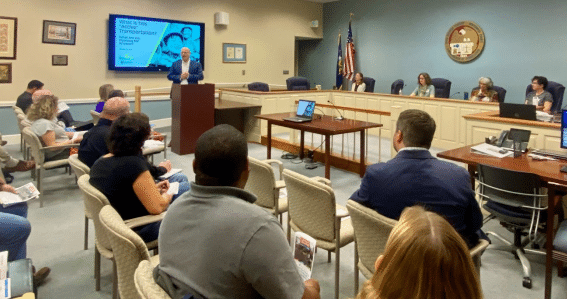
This document was created by the Montgomery County Planning Commission in conjunction with the Pennsylvania WalkWorks program and its director Samantha Pearson. While Montgomery County released the document primarily for its municipalities, the Guide is relevant state-wide and easily usable by any
Pennsylvania city, borough, or township. The document’s abbreviated nature makes it an approachable and quick read for any municipal official interested in updating their codes. Similarly, the Guide’s compact form makes it easier to use menu-style, choosing elements that a municipality identifies as a good fit for their community.
Demonstrating the desire for straightforward and accessible guidance, the Guide has gone through several print runs and has been requested and distributed state-wide. It serves as a model for planners to provide their expertise in a format that municipal officials and the general public welcome and use.