
Planning Trend: Artificial Intelligence
By Betsy Logan
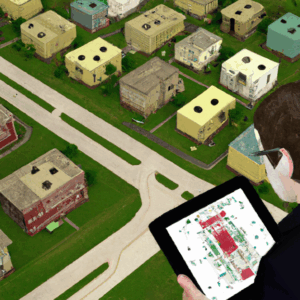
Artificial Intelligence (AI) is a rapidly emerging and changing technology that has the potential promise to revolutionize the planning field. While AI is already in much of the technology we use daily (algorithms for movies, filtering spam, etc.), web services such as ChatGPT allow you to incorporate AI into your daily planning practices. One example is using ChatGPT to draft ordinances or policy guides. DALL-E, an AI application in Canva, can be used to create images, such as the picture made for this article showing an “urban planner designing a traditional neighborhood town.” While this technology is not problem-free, learning to use AI now can provide additional ideas on incorporating it into your workflow. In the long term, some of the anticipated uses of AI in planning practice include the following:
- Traffic Management and Mobility Solutions
- Infrastructure Development
- Data Analysis and Predictive Modeling
- Urban Resilience and Disaster Management
- Community Engagement and Decision Support
Over the past few years, the APA has published and presented several documents and webinars related to the benefits of AI use and its drawbacks. One crucial item regarding AI is the ethical implications of using it. According to the Planning Advisory Service published Report 604, “Planning with Artificial Intelligence,” by Thomas W. Sanchez, Ph.D., “The ethical use of artificial intelligence (AI) is a complex and multifaceted issue…” (p. 49). Biases, transparency, and fairness are only some ethical challenges that users should be aware of when using AI. Planning.org has some create in-depth reports, memos, and articles where you can obtain more information on the ever-changing technology that is AI.