Posted on September 27, 2022
Municipal Tree Canopy in Cedar Rapids Iowa & Rethinking Resiliency Here at Home
Environment Healthy Communities
If you didn’t see the ReLeaf Cedar Rapids feature in August’s Planning magazine, National Preparedness Month is a great time to check it out. Two years ago, the Iowa town lost over a half million trees to a severe storm with powerful straight-line winds. Since then, ReLeaf Cedar Rapids has emerged as an economical and ecologically responsible framework for reestablishing Cedar Rapids’ urban forest.
Planners in the areas of municipal management, open space and recreation, streetscape design, community development, and green infrastructure can take a proactive stance and incorporate Cedar Rapids’ eight ReLeaf Rules in their local community before a major disaster strikes. The eight rules for replanting efforts in Cedar Rapids focus on finding the right tree for the right location, balancing local character with overall species diversity, and maximizing the use of small seedlings and large canopy trees.
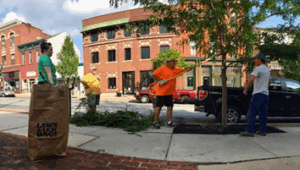
A few of the rules run counter to traditional wisdom in urban forestry. For example, trees do not need to be widely separated in public spaces to maintain their health, nor should they be surrounded by grass. Likewise, larger-caliper trees are not always better at planting time. If they can be protected from foot traffic and maintenance equipment, 1-inch caliper trees tend to outperform larger ones over time because their root ball suffers less damage when transplanted.
With the increasing frequency of severe storms and the emergence of threats like the spotted lantern fly, it is well worth thinking about how your community can build resiliency into its tree management program. If your local community has a Shade Tree Commission, this appointed board is a great springboard for engaging with municipal officials and residents. In Pennsylvania, Shade Tree Commissions can be formed to regulate the planting, pruning, and removal of street trees, but many Tree Commissions also sponsor community events, perform volunteer work, maintain tree inventories, and develop planting plans. Parks and Rec boards and Public Works departments are other local entities whose activities can support municipal tree cover goals.