An Interview with Amy Wiles, AICP
Amy Wiles, AICP is currently the Manager of Planning and Design at E. Holdings, Inc. (www.eholdingsinc.com),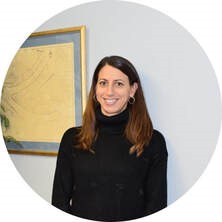 which is a small woman- and minority-owned consulting firm in the City of Pittsburgh. At EHI, Amy manages a wide variety of community planning projects, including community visioning studies, wayfinding and signage master plans, housing studies, and community engagement projects. Prior to her work at EHI, Amy was a planner with Mackin Engineering Company and is a graduate of Penn State University, including a summer semester at Leiden University, The Netherlands. Amy is currently serving as the APA-PA Southwest Section Secretary as well as the Section’s Professional Development Officer.
- How and why did you decide to become a planner?
I started working as a planner for Mackin Engineering Company right out of college. I wasn’t exactly sure what I wanted to do with my life yet, but I began working with communities on a variety of planning projects and really enjoyed the diversity of topics. I knew I wanted to help people in some capacity, and planning seemed like a way to do it at a community-scale. I really like working with communities to help figure out what is important to them, what they want to look like in the future, and then work to create a realistic, actionable plan for them to achieve their vision.
- In the era of COVID-19, with some of your most recent work, how have you been able to make sure underserved communities have a voice in the planning process?
I started my new job at E. Holdings last fall, right in the crux of the pandemic. One of the reasons I chose to come here is that it is a woman- and minority-owned business. Our focus is on connecting people to place and making sure that we are reaching as many people in our community engagement efforts as possible. We have had to adapt our methods continuously to align with whatever safety protocols have been in place at the time. We know that not everyone has access to reliable internet, so we cannot rely solely on online engagement methods. We have to be even more creative than the norm. We have been successful with hosting (socially-distant) pop up tents at high traffic areas (such as grocery stores) to engage with residents; publicizing 1-800 numbers for people to call, either to join online meetings or to leave a message related to a project; providing project materials and special meetings for Spanish-speaking populations; creating paper surveys and distributing them at bus stops and transit centers; and just in general, trying to reach people through their existing local networks. We try to ensure that our public participation is representative of the actual demographic. If our online methods are producing disproportionate results, we work to implement other methods and targeting the communities, neighborhoods, or populations that are underrepresented. - What is the future for diversity, equity, and inclusion in the planning profession?
The Covid-19 pandemic has likely changed the way in which we do community engagement for the foreseeable future. In some instances, the online methods have increased accessibility, since people don’t have to even leave their house, let alone travel to attend a public meeting. However, for some communities, it has really created a challenge to ensure that our efforts are inclusive. We know that Internet-access (and the lack thereof) has created a divide, and therefore we cannot approach engagement or planning in a one-size fits all manner. Planners need to be constantly thinking about how what we do and the plans we create address diversity, equity and inclusion. We need to do better at looking at the impact of what we are planning and how it addresses each of these items. How are we planning for affordable housing in our communities? Is transit readily-accessible to connect people to schools and jobs? How can we build and increase local capacity in underserved neighborhoods to take local ownership of planning and neighborhood improvements? We need to be sure that our efforts are addressing some of our past failings to create more sustainable and inclusive communities. - What is your favorite vacation spot and why?
I love going to the beach – so I’m all about any sport that can be done there, whether it be sand volleyball, stand up paddle boarding, kayaking, or biking. Bring on summer! - The annual conference is being held in Pittsburgh, by the Southwest Section and as co-chair, how can members become involved with the conference?
Laura Ludwig (Chair of the Southwest Section) and I are this year’s conference co-chairs and we have created a great conference committee to help us plan it. The Southwest Section is huge – we cover 15 counties! All of our meetings are online, which makes it really easy for members from our eastern counties (we go as far east as Huntingdon and Fulton) to participate. If anyone is interesting in assisting with our efforts in any way, just email us at planswpa@gmail.com and let us know! We have only had two meetings so far so it’s not too late to join us!