
Preserving the Underground Railroad in York County
It’s unfortunate but true: those who plan for historic resources are often braced for bad news. This month, however, we’re diving into a recent York County success.
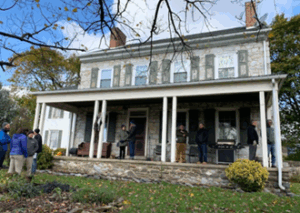
The Mifflin House in the fall of 2019, as preservationists worked to save it
In 1800, the locally prominent Mifflin family built an estate called Hybla on a rise above the banks of the Susquehanna River, just outside of Wrightsville in York County. With their Quaker abolitionist beliefs and the home’s strategic location, it is no surprise that the Mifflins soon began to work with Robert Loney and other formerly enslaved and free blacks living in Wrightsville and Columbia to secretly transport people seeking freedom across the river. For decades, the house remained an active station on what would become known as the Underground Railroad. During the U.S. Civil War, the home and surrounding farm saw skirmishes that culminated in the burning of the nearby Columbia-Wrightsville covered bridge. With no way to cross the mile-wide river, Confederate forces instead swung westward, where an intense battle around Gettysburg, Pennsylvania, was fought a few days later.
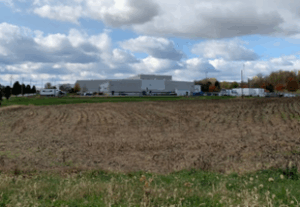
Industrial development lies just to the west, across a small cornfield
After the Civil War, history more or less left Hybla, now known as the Mifflin House, behind. Growth and development, however, did not. In the 1960s, a new highway-style roadbed for U.S. Route 30 was constructed just north of the farm. An exit was built just to the west. At some point, the farm and much of the surrounding land was zoned industrial. Lots were developed one by one over the years and a small business park took shape adjacent to the 87-acre property. It was only a matter of time until development of the Mifflin House property would occur.
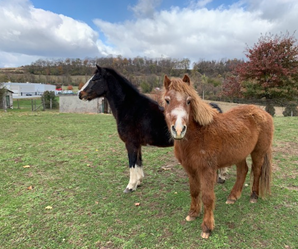
The Mifflin House remains a working agricultural property
In 2015 or so, the owners of the Mifflin House, a local family, were in negotiations with a buyer who proposed to demolish the house and outbuildings, flatten the topography, and construct warehouses. A development plan was submitted to Hellam Township, whose regulations required only that the local preservation society provide advisory comments. A grassroots effort gained momentum, but the home’s future looked grim. In 2017, Preservation Pennsylvania placed the home on its PA At-Risk list, a designation given to very few properties
In 2019, preservationists obtained a two-year delay of the sale. A variety of historically sensitive uses were explored. Plans came and went. Even a mini casino was on the table (it went into the ailing Galleria Mall a few exits west instead). The COVID-19 pandemic emerged and evolved. And finally, a financing plan came together: the nonprofit Conservation Fund purchased the property for $5.5M in May and will hold it, while the Susquehanna National Heritage Area finalizes the complex mix of state, county, and private funds it needs to become the final owner.
In May 2022, the Mifflin House was considered saved by Preservation PA. While this is unarguably good news for everyone, it couldn’t have happened without the commitment of cross-sector partners locally, regionally, and nationally. Despite a community where residents, regulators, the owners, and even the developer were inclined to support the property’s preservation, the process took more than five years and required significant amounts of time, money, and social and political capital spent in advocacy and planning. The future is bright, however. Susquehanna Heritage plans to restore the buildings and open the entire property to the public, reimagined as a regional draw for tourists that that will serve as a gateway to the historical significance underfoot as well as the many other cultural and natural resources nearby.