Posted on January 31, 2025
No One Wants to Work Anymore: A Review of Employalty by Joe Mull
Economic Development Education & TrainingBy Amy S. Evans, AICP
In its 2025 Trends Report, the American Planning Association notes big changes in how many people relate to their work, in that more and more people think of their job as something they do, not something they are. People are also increasingly looking for work that fits seamlessly into their lives in reasonable balance with their personal goals, obligations, and leisure activities.
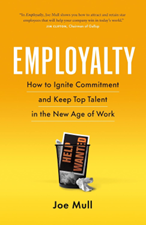
Business consultant and podcaster Joe Mull, in his 2023 book Employalty: How to Ignite Commitment and Keep Top Talent in the New Age of Work, argues that current staffing challenges are the fruits of 40+ years of increasing demands on workers: “People have been forced to work longer hours with fewer resources, doing more demanding jobs, for reduced benefits, less job security, and stagnant wages. In what amounts to a transactional relationship—the exchange of skills and effort (from an employee) for employment and compensation (from a company)—one side has been getting hosed for years.” Mull coined the word ‘employalty,’ a mash up of employee, loyalty, and humanity, to describe his answer to these pressures. Mull observes that it’s not that “no one wants to work anymore,” it’s that people, especially those with in-demand skills, are prioritizing their needs very differently. In a current work climate where the number of jobs far outpaces the number of workers, employers must focus on creating great jobs in order to attract great employees.
Mull’s central thesis is that “people generally do a great job when they believe they have a great job.” In short, a thriving workforce demands ideal jobs, meaningful work, and great bosses. An ideal job balances compensation and workload fairly and offers flexibility in when and where work happens. Second, the work must be meaningful. Meaningful work occurs when an employee can feel good about the purpose of their work, the work leans into their individual strengths, and they have a sense of belonging in the organization. Perhaps unsurprisingly, the most influential factor is having a great boss. As Mull notes, “Years of research suggest that bosses are the biggest reason someone leaves a job or stays.”
The Great Resignation is not an artifact of the COVID-19 pandemic. Ever-increasing work pressures over many decades are pushing people to find better situations, while more jobs than workers continue to be added to the US economy. As Mull notes, “ … the Great Upgrade, as [the Great Resignation] should be called, has been around for a decade, has increased year over year, wasn’t caused by the coronavirus, and is expected to continue until who knows when. This is not a blip or a fad. Staffing challenges and candidate shortages are here to stay and, in most industries, will get worse.”
What do organizations do in the face of these big picture trends? Mull advises that leaders start by seeing their employees as human beings, not commodities, then aligning policy and practice accordingly. The first step to attracting quality candidates may be as simple as asking yourself, is it that employees don’t want to work, or is it that they do not want to work for me?