
Posted on March 1, 2024
Could Accessory Dwelling Units Solve our Housing Crisis?
Comprehensive Plan Economic Development Governance / Working In Planning Housing Law & PolicyCould Accessory Dwelling Units Solve our Housing Crisis?
By Brian O’Leary, AICP
Housing issues, especially related to cost and overall supply, have risen to the top of many political agendas, and the state legislature is now considering changes to the PA Municipalities Planning Code that would require accessory apartments to be allowed in homes, similar to changes made a couple of decades ago requiring home occupations to be permitted.
On the face of it, this seems like a great solution to the housing crisis. Theoretically, the amount of homes supplied from single-family housing could double, with minimal impact on the built environment and with most of the new accessory apartments relatively affordable. The reality might not be quite as rosy, given the difficulty of building accessory apartments, but the supply and affordability of housing could be greatly improved with this simple change. In addition, with an aging population that is staying in place, homeowners could have more affordable and supportive living options when remaining in their homes.
Over the years, many planning organizations have advocated for accessory apartments, often providing information and examples to local municipalities. The Tri-County Regional Planning Commission, for example, has an accessory dwelling unit fact sheet that notes:
An accessory dwelling unit (ADU) is an additional living space located on the same property as an original, larger residence. They’re often called by other names: granny flats, mother-in-law units, casitas, ECHO units and dozens of others. ADUs can offer affordable accommodation to elderly relatives or children returning home, or they can be rented out to contribute toward mortgages and other associated housing costs.
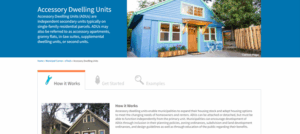
You can access this fact sheet on their planning toolkit online.
In one of their guides to promoting workforce housing, the Montgomery County Planning Commission offers an accessory dwelling unit model ordinance.
And the Chester County Planning Commission has an online etool that provides links to local municipal examples of accessory dwelling unit regulations.
It will be interesting to see where the proposed state legislation goes, but, hopefully, it will lead to more affordable, workforce, and starter housing getting built, including many more accessory apartments.