Posted on April 13, 2026
APA PA Board Appoints Pam Shellenberger to Chesapeake Bay Local Government Leadership Workshop
Environment Governance / Working In PlanningAPA PA Board Appoints Pam Shellenberger to Chesapeake Bay Local Government Leadership Workshop
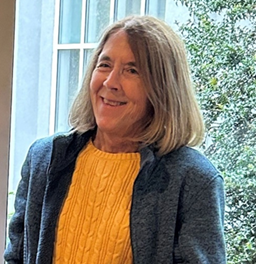 At the March 20, 2026 APA PA Board of Directors meeting, the Board appointed Pam Shellenberger to serve as the Chapter’s representative on the Chesapeake Bay Local Government Leadership Workgroup. Pam retired from 41+ years of employment with the York County Planning Commission (YCPC) at the end of 2025. During her tenure, she served in a variety of positions. Most notable was serving as Chief of the Long Range Planning Division and Administrator for the York County Stormwater Consortium (YCSWC). As Chief Planner, Pam managed a staff of five (5) planners to develop and implement the County’s Comprehensive Plan and worked closely with the County’s 72 municipalities. In January of 2026, Pam was rehired by the YCPC to continue serving as the YCSWC Administrator to implement the Regional Chesapeake Bay Pollutant Reduction Plan. Her prior experience includes positions with local governments and non-profit agencies in Pennsylvania and North Carolina. She earned AICP status in 2001.
Pam has served on the Manor Township (Lancaster County) Planning Commission since 2008 and is currently the Chair. She also continues her involvement with a variety of committees. After being an active Planner for almost 50 years, it’s hard to fully retire from a profession that has been rewarding and enjoyable.
Regarding APA PA, Pam has chaired the “Great Places in Pennsylvania” Program since its inception in 2014. She also serves on the Legislative Committee and Central Section Council, including 20+ years as the prior Secretary-Treasurer. In the past, Pam served two terms as Chapter Treasurer and on several Conference Planning Committees.
Overview of Chesapeake Bay Agreement and Local Government Leadership Workgroup
The revised Chesapeake Bay Watershed Agreement, which includes new goals, outcomes, and targets, was signed by the six Bay States, District of Columbia, and EPA in December of 2025. It is a commitment to “achieving the restoration, conservation and protection of the Chesapeake Bay watershed, its water, habitats, fisheries and wildlife for the benefit of all people living in and visiting this nationally treasured watershed.” In 2040, the partnership will come together to formally assess progress and amend the Agreement, as needed, to ensure work continues to reflect the shared Vision.
The revised Agreement established four Goal Implementation Teams (GITs): Clean Water, Engaged Communities, Healthy Landscapes, and Thriving Habitat, Fisheries, and Wildlife. The Local Government Leadership Workgroup (LGLW) is an advisory committee to the Engaged Communities GIT. The Workgroup’s charge is to “increase knowledge and support the capacity of local government leaders in decision-making, such as land-use planning, to implement local actions that advance the Chesapeake Bay Watershed Agreement.” Targeted actions are to (1) Engage directly (e.g., roundtable discussions, trainings, webinars) with at least 400 local government leaders annually and (2) Engage indirectly (e.g., newsletters, case studies, social media) with at least 4,000 local government leaders annually.
A notable tool developed by the Chesapeake Bay Program in coordination with the LGLW is Protect Local Waterways. It is a guide on how local government leaders and other stakeholders can help protect the health and vitality of local waterways. It is also an excellent resource for planners who are working with local governments on land use, environmental, and community planning initiatives.